Budget-Friendly Kids Party Rental: Bounce House Rental Prices Explained
Every parent planning a backyard party eventually lands on the same question: what does a bounce house actually cost, and why does one quote look twice cheap inflatable slide rental as high as another? After years of booking and running events, I can say the number on the invoice rarely tells the whole story. The size of the inflatable, the season, the distance to your yard, and what you need for power and surface prep all nudge the price up or down. Getting a fair deal is less about haggling and more about matching the right unit to your space and guests, then removing the hidden costs that catch first-time renters off guard.
This guide breaks down the moving parts behind bounce house rental prices and their cousins, from water slide rental to obstacle course rental. You will see real price ranges, understand how companies structure fees, and learn how to trim the bill without cutting corners on safety.
What sets the baseline price
When families call a bounce house rental company, the first quote they hear is usually based on a standard 4 to 6 hour rental block, local delivery, and a basic dry jumper rental. That baseline can be surprisingly reasonable in many markets. In a typical suburban area, a straightforward inflatable rental with a 13 by 13 foot jumper often falls between 120 and 220 dollars for a weekday, with weekend rates sitting a little higher. As you move up in size or add features such as a slide, a basketball hoop, or a wet option, the price climbs.
The main levers:
-
Size and design. Bigger units require more material, more blower capacity, and more setup time. A combo bounce house rental with a slide attached commands more than a plain jumper. The price difference is not just for the thrill factor, it reflects labor and logistics.
-
Wet vs dry. Water means extra cleaning, longer turnarounds, and sometimes special surfaces or drainage needs. Expect water slide rental and wet dry slide rental models to carry a premium over dry inflatables.
-
Duration. A 4 hour block is common. Extending to 6 or 8 hours may add a modest fee. Overnight or multi-day rentals cost more, though some companies offer second day discounts at 30 to 50 percent of the first day rate.
-
Distance and access. Delivery beyond a standard radius, difficult access, or stair carry can incur fees. Parks and venues often require earlier setup and later pickup, translating into higher labor cost.
-
Season and demand. Late spring through early fall, and especially holiday weekends, are peak time. You will see bounce house rental prices and water slide rental prices tighten upward simply due to limited inventory.
Quick reference: what families commonly pay
This compressed snapshot covers typical ranges in many mid-sized U.S. Markets. Coastal cities and resort towns tend to sit 10 to 25 percent higher. Rural areas with fewer providers can swing either direction depending on competition.
- Standard jumper rental, 13x13 dry: 120 to 220 dollars for 4 to 6 hours, 160 to 260 on popular weekends
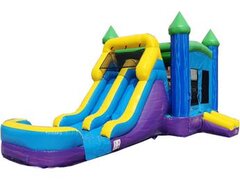
- Combo bounce house rental with slide, dry: 180 to 350 dollars, add 30 to 80 dollars for a wet option
- Inflatable slide rental, dry single-lane: 220 to 380 dollars, wet dry slide rental often 280 to 450
- Giant water slide rental, 18 to 22 feet: 350 to 700 dollars, tall dual-lane models can exceed 800
- Inflatable obstacle course rental, 30 to 65 feet: 350 to 900 dollars, larger modular courses scale higher
These figures usually include setup, takedown, and local delivery. Taxes, permits, attendants for larger rides, generators, and park fees are extra.
The hidden costs that turn a bargain into a headache
A quote that looks low at first glance can balloon after the add-ons roll in. Some extras are unavoidable and fair. Others you can plan around.
Power. One blower pulls about 8 to 10 amps on a dedicated 15 or 20 amp circuit. Big combo units may need two circuits, obstacle courses and giant water slide rental units can need three. If your outlets share a circuit with a kitchen or garage freezer, you will trip breakers. A generator solves it, but rental and fuel often add 75 to 150 dollars. If you can run separate outdoor GFCI circuits with heavy gauge extension cords (provided by the company), you avoid the generator.
Surface preparation. Staked on grass is simplest. Asphalt or concrete means sandbags, which are heavy and time-consuming to haul. Most companies include sandbagging in the price for smaller inflatables, but large units can incur a ballast fee. If you have artificial turf, ask about protective tarps and whether the company allows water use. Water on turf can be fine if you plan for drainage and drying time, but some installers charge an additional cleaning fee if turf infill coats the unit.
Permits and parks. Public spaces often require a certificate of insurance listing the municipality as an additional insured. That is standard for a professional party rental company, but they need a few days to process it. Expect a modest admin fee. Many parks also require generator-only setups, which adds cost.
Stairs and tight access. A rolled 18 foot water slide can weigh 400 pounds. If installers have to navigate long slopes or staircases, they will add a labor fee or decline the job. Measure your side yards and gates. A 36 inch gate is often the minimum for larger inflatables.
Cleaning and damage. A professional outfit cleans after every rental, which is baked into the base rate. Extra charges appear after misuse: gum or paint, silly string (it stains), or pet waste in the setup area. If a company flags silly string in bold letters, take it seriously. It can etch the vinyl.
How size and features change the experience, not just the price
The temptation when shopping for a kids party rental is to buy the biggest unit the budget will allow. Bigger is not always better. Match the inflatable to your guest list.
A toddler bounce house rental with low walls and soft pop-ups is perfect for ages 2 to 5. The footprint is smaller, usually 10 by 10 or 11 by 13, and the price sits on the low end. You get calmer play, easier adult supervision, and fewer collisions.
The classic 13 by 13 jumper rental works well for mixed ages, but once you add a slide you spread the action and reduce pileups at the entry. A combo bounce house rental gives you a bounce area, a climb, and a slide in one footprint, which often fits a small yard better than two separate inflatables.
Obstacle course rental changes the tone entirely. Kids cycle through instead of lingering inside, which can keep lines moving. It also adds competition and encourages older children to join in. For a birthday party rental with guests 8 and older, an inflatable obstacle course rental can be a brilliant anchor. If you expect a wide age range, consider dividing the time: early hour for younger kids on a smaller unit, later hour for older kids on the course.
Water ramps up excitement, and risk. Water slide rental brings its own supervision needs. Younger kids will try to go headfirst, older kids will chain up and go in groups. That is where an attendant earns the fee. A wet dry slide rental gives you flexibility. If the forecast cools, run it dry and save your lawn from puddles.
Regional price quirks you should expect
Price ranges online rarely disclose how much geography bends the market. Here are real patterns I see:
-
Dense urban areas: two factors push prices up. First, storage and labor cost more. Second, travel times and parking add slack time to each job, reducing how many setups a crew can handle. The result, a standard inflatable rental may start near 200 dollars and go up.
-
Mountain or lakeside towns: summer peaks hard. Water slide rental prices for the same 18 foot model can swing from 350 in May to 600 in July because inventory sells out. If your date is flexible, look at shoulder weeks.
-
College towns: graduation weekends add scarcity. If you plan a backyard party rental in mid May, reserve early or plan a weekday.
-
Areas with strict park policies: more generator-only sites plus mandated additional insured wording on certificates can add 100 dollars or more to the total.
How bundling helps or hurts the budget
Most party rental companies are happy to add tables, chairs, a popcorn machine, even a small tent. If you need those items, bundling is worth it, because one truck and one crew beats coordinating multiple vendors. Ask for a package price that includes setup and pickup in the same window. However, be cautious when a bundle tempts you into more equipment than you need. Three concession machines sound fun until you realize each requires supervision, power, and cleanup. Choose the inflatable party rental first, then add only what supports the flow of your party.
A realistic example comparison
Two quotes for a Saturday in June, same ZIP code, same 4 to 6 hour window.
Company A: 13 by 13 jumper rental at 165 dollars, free local delivery up to 15 miles, tax additional, optional 25 dollar rain policy that allows a same-day weather cancellation for store credit. No generator needed due to accessible outlets. Out the door, around 180 to 190 dollars with tax. The yard is grass, stakable, with a 42 inch gate. Setup takes 20 minutes.
Company B: 15 by 15 combo bounce house rental at 285 dollars, water option adds 50 dollars. Delivery included within 10 miles, then 2 dollars per mile after. House is 14 miles away, so 8 dollars extra each way, often rounded. Generator optional at 95 dollars if you cannot confirm two dedicated circuits. Customer opts for dry use, no generator. Out the door, about 315 to 330 dollars with tax and small fuel surcharge. Setup takes 40 minutes.
Neither is a bad deal. One serves a smaller group of five-year-olds on a smaller lawn. The other suits a mixed-age crowd that wants the slide. The better choice depends entirely on your guests and space.
Safety and staffing are worth paying for
Safety gear and practices cost money, and they should. Properly staked inflatables on grass use 18 to 24 inch steel stakes hammered at an angle, with redundant points on corners and anchor tabs. On hard surfaces, heavy sandbags or water barrels anchor the unit, sometimes both if wind picks up. A trained installer will measure the blower amperage at startup, check GFCI function, and verify that the unit is level and tight.
obstacle course rentalWhen you step into inflatable obstacle course rental or taller slides, staffing becomes more than a courtesy. An attendant controls the flow and enforces spacing. It is common to see an attendant fee of 25 to 50 dollars per hour, which feels steep until you compare it to an ER copay. Ask whether the company allows you to supply your own adult attendants who follow their safety briefing. Some will allow it for straightforward units and require their own staff for larger slides.
Confirm insurance. A legitimate bounce house rental company carries general liability insurance. Do not be shy about asking for a certificate. If you are booking a park, you will probably need to.
How to choose between wet, dry, and combo setups
Climate and yard layout should steer this decision. In humid coastal climates, a wet slide cools kids fast, but it can also turn your lawn to soup if you do not manage runoff. Dry slides ride well when air temps are above 70 degrees and the vinyl is warm. The hybrid wet dry slide rental bridges those days when weather is uncertain.
For small yards, a combo bounce house rental offers a lot of value. The bounce zone and slide share a base, so you only need one safe fall zone. You pay a bit more than a standard jumper, but less than renting a separate inflatable slide rental. If your party plan includes games and activities, the combo becomes a station in the rotation, which keeps kids moving and reduces clusters.
If you are planning for teens, go taller or go competitive. A giant water slide rental or a two-lane obstacle course makes it feel less like a little kids event. Price per thrill minute improves because older kids cycle faster and get more runs in.
Working with parks, HOAs, and small spaces
Homeowners associations often care about sightlines and noise. Blowers hum like a large shop vac. If your yard shares a fence line with a neighbor who works nights, give them a heads-up. Many HOAs require that inflatables stay below the fence line when deflated and do not block sidewalks. Measure your access path. A rolled standard bounce house rental often measures 3 feet wide and 4 feet tall. Corner turns in narrow side yards can be the deal breaker, not the gate width itself.
Public parks introduce rules on staking, generators, and proof of insurance. Some parks ban stakes to protect irrigation lines. Ask your provider about sandbag-only setups and whether that changes the allowable unit height. Many cities limit inflatables to 15 feet tall in public spaces without special permission. That rules out a giant water slide rental in some parks even if the space seems enormous.
What to look for in a provider
A good party rental partner asks more questions than you expect. They want to know the age range, headcount, ground surface, access, power, and whether you plan to serve food near the unit. They will volunteer weather policies, wind thresholds, and cleanup expectations.
Read the contract. You want clarity on rainouts and wind cancellations. A common policy allows you to cancel for a full refund or credit if sustained winds exceed 15 to 20 mph. If you must cancel for light rain, many companies apply your deposit to a future date within a year. Reasonable, but only if you know it upfront.
Look for detailed photos and measurements on their site. A professional bounce house rental company will list footprint and clearance requirements, and they will show seams, netting, and anchor points in their gallery. Units should look clean. Faded vinyl is not a safety concern by itself, but grime in the corners tells you about maintenance habits.
Where the time charges hide
The rental block is a window, not a promise that your unit inflates exactly at the party start time. Crews juggle routes to maximize efficiency. Ask for a setup window at least 60 to 90 minutes before guests arrive. Most companies do that at no extra charge, since the clock starts when the unit is installed and signed off. If you need pin-point timing, for example at a community center with strict hours, you may pay a tight-window fee.
Overnights sound convenient, and many providers allow them when weather is calm and the site is secure. The fee is usually modest, 50 to 120 dollars, because it saves the crew an evening pickup. The tradeoff is liability. You, not the company, supervise the unit after hours. If neighborhood teens climb the fence and use the slide at midnight, you are responsible for damage or injury.
Strategies that keep the total low without cutting quality
Plan your rental like a small project. Identify the key constraint, then adjust around it. Sometimes the constraint is space, other times it is power, or the age spread of guests.
-
Book a weekday if you can. Many companies discount Monday to Thursday by 10 to 20 percent. Schools and daycares use those days, so the units are out, but demand is still lower than the weekend crush.
-
Pick the right size, not the largest. A well-chosen 13 by 13 with a basketball hoop can engage a dozen kids in rotation for hours. Oversizing wastes space and budget, and can create supervision blind spots.
-
Bundle only what adds value. One generator and one concession machine add fun without overloading circuits or staff. Resist the tower of snow cone, cotton candy, and popcorn all at once.
-
Share with a neighbor. Back-to-back rentals in adjacent yards allow a single delivery route. Some providers will split the travel cost or shave time charges if you coordinate.
-
Ask about dry rates on dual-use slides. If it is a cool day, running a wet dry slide rental without water often lowers the cleaning time and cost.
A simple booking checklist that avoids expensive surprises
- Measure your access path and gate, and snap two photos: the gate and the yard where the unit goes
- Confirm power: count available outdoor circuits, locate outlets, and note other heavy users on the same breaker
- Check your surface: grass, turf, concrete, or asphalt, and where water will drain if using a wet unit
- Review weather and wind policies, deposit terms, and what qualifies for a reschedule
- Ask for the full out-the-door price including delivery, tax, generator, attendants, and any park or HOA fees
Share this information when you ask for quotes. Experienced schedulers can steer you to the right inflatable party rental once they see your constraints.
The role of setup, teardown, and site safety
On arrival, crews do more than unroll fabric and plug in a blower. They assess overhead clearance, look for power lines, tree branches, and eaves. They find a flat spot, or they level with foam pads or small underlays. They set entry mats to reduce grass tracking and place cones where extension cords run. Good crews carry a selection of stakes, ratchet straps, and sandbags to adapt onsite. None of this should feel mysterious. Ask questions. If you see a blower that looks incorrectly shielded from kids, speak up.
Teardown includes drying, sweeping, spot-cleaning, and rolling tight enough to fit back into the dolly lane. Wet units get extra time and a second pass back at the warehouse. That extra labor feeds into water slide rental prices and is one reason many companies taper wet rentals as the season cools.
When a toddler unit is the smartest choice
If your guest list skews young, a toddler bounce house rental is a better fit than a tall combo. Lower slide angles, soft obstacles, and better sight lines reduce the need for constant adult intervention at the entry. Parents appreciate that they can stand just outside the mesh and maintain eye contact. Price typically runs 100 to 180 dollars for a half-day in many markets, which frees budget for a face painter or a bubble machine.
The value of a reputable provider during crunch time
Bad weather happens. A reputable party equipment rental company calls early, offers options, and honors agreed weather clauses. If wind thresholds make operation unsafe for a giant water slide rental, they will not set it up. That can be frustrating in the moment. In the long run it is the only acceptable answer. Good companies also have backup units ready if one fails an inspection. If your chosen unit goes down the day before your event, they will swap in a comparable model and adjust the price if needed.
Final thoughts from years of parties and pickups
Successful backyard party rental planning starts with honest constraints. Measure the space, acknowledge the age mix, and decide whether water is worth the cleanup. Then pick a unit type that creates the experience you want within those lines. The cheapest option is not always the best value if it squeezes kids into a single entry or needs a generator you do not have. Likewise, the flashiest inflatable on the website may not fit your yard or your neighbor’s patience.
A fair price looks like this: a clear base rate for the chosen inflatable, delivery included within a stated radius, taxes itemized, and optional add-ons priced up front. No gotchas about power at the last minute. No surprise cleaning charges for normal grass clippings. When you compare bounce house rental prices or water slide rental prices, put the quotes side by side with the same assumptions about time, distance, power, and staffing.
When the truck rolls away and the blower hums, the numbers fade and the kids take over. That is the goal. Safe, happy chaos, contained within vinyl walls, for a few golden hours. If your planning keeps the hidden costs in check and matches the inflatable to your guests, you will get there without breaking the budget.